What’s the Difference: Safety Film vs Security Window Film?
Glass is everywhere in
modern homes and commercial buildings, from
storefronts and office partitions to sliding doors and large picture windows. That exposure creates a simple reality for property owners in South Jersey and the greater Tri State area. When glass breaks, people can get hurt, operations can be disrupted, and break ins can become easier. In recent years,
safety and security concerns have increased for homeowners, business owners, and property managers who want practical protection without changing the look of their building. Window film can help, but not all films provide the same level of protection.
Safety film and security
window film are related, yet they are designed for different risk levels and performance goals. Understanding the difference is essential if you want the right solution for your property, your budget, and your threat profile. This guide breaks down how each film works, what to expect during impact, and
how to choose the best option for New Jersey properties.

Table of Contents
- What is safety window film and how does it work?
- What is security window film and what makes it different?
- Thickness and strength differences that matter
- How each film performs during impact or breakage
- Best use cases for homes and commercial properties
- How New Jersey climate affects film performance
- Why professional installation affects protection and life
- Safety vs security film comparison table
- FAQ
- Conclusion and free estimate
1) What is safety window film and how does it work?
Safety window film is designed to reduce injury risk when glass breaks. It is typically a clear or lightly tinted polyester film that bonds to the interior surface of the glass. If the glass breaks due to an accident, a storm impact, or thermal stress, the film helps hold shards together and can reduce the amount of sharp glass that falls into a room or onto a sidewalk.
Think of safety film as a glass retention upgrade. The glass may still break, but the film can help keep broken fragments more contained. This can be valuable for properties with children, high foot traffic areas, glass near entryways, or buildings where broken glass could injure occupants or customers. It can also be useful in environments where glass breakage is more likely, such as doors, sidelites, and large windows near play areas or parking lots.
Many safety films also offer UV protection. While UV rejection is not the main reason people choose safety film, it can be an added benefit for interior protection. UV protection helps reduce fading of floors, furniture, and merchandise, which matters for both homeowners and retailers.
When people search for terms like glass safety film vs security film or window film protection NJ, they are usually trying to answer a practical question. If the primary concern is injury reduction from accidental breakage, safety film can be a strong fit.
2) What is security window film and what makes it different?
Security window film is designed to go beyond injury reduction. It is built to increase resistance to forced entry and to help keep glass in place under heavier impact.
Security film is typically thicker than safety film and may be part of a broader safety and security system that includes attachment solutions, also called anchoring or wet glazing systems in some applications.
The key difference is intent and performance. Safety film focuses on holding broken glass together to reduce injury. Security window film focuses on delaying access through glass by making it harder to penetrate quickly. It can also help keep glass attached to the frame longer, especially when paired with the right installation methods for the frame type.
Security film does not make glass unbreakable. It changes what happens after the first strike and during repeated strikes. A burglar often relies on fast access. The longer it takes to create an opening, the more likely the attempt is to fail, alarms trigger, and attention is drawn to the site. For that reason, security film is popular for ground floor windows, storefront glass, offices with sensitive equipment, and properties that have experienced break ins or vandalism.
South Jersey Window Tinting installs LLumar Vista window film options engineered for safety, security, UV protection, and long term durability. If you are researching commercial security film South Jersey solutions, product selection and correct installation matter as much as the film category.
3) Thickness and strength differences that matter
Thickness is one of the easiest ways to understand the safety film vs security window film discussion, but it is not the only factor. Film performance comes from a combination of thickness, material design, adhesive quality, and installation technique.
Typical thickness ranges. Safety films are often in a lighter to mid range thickness. Security films are commonly thicker and built with multi layer construction for higher tensile strength and tear resistance. Thickness is typically measured in mil, where 1 mil equals 0.001 inch. Even small changes in thickness can affect how the film stretches, how it resists tearing, and how it holds broken glass together.
What thickness changes in real life. Thicker films generally provide better resistance to tearing and can retain broken glass more effectively during heavier impacts. They may also require more careful installation because they are less forgiving during application. On certain glass types, the wrong film choice or wrong installation method can increase the chance of thermal stress issues. That is why a professional assessment is important for window film protection NJ projects across
homes and
businesses.
Strength is not just thickness. A high quality thinner film can outperform a low grade thicker film if the material design and adhesive system are better. Product engineering matters. Premium film lines like LLumar Vista window film are designed for consistent performance and durability in real world conditions, including the seasonal temperature swings typical across Medford, Trenton, Cherry Hill, Camden, Mount Laurel, Burlington County, Ocean County, and Philadelphia.

4) How each film performs during impact or breakage
This is where property owners get the clearest answer to search intent. What happens when something hits the glass or someone tries to break through it?
Safety film performance during breakage. In many accidental break situations, safety film helps keep shards attached to the film layer so they do not scatter as widely. This can reduce the severity of laceration risk and reduce cleanup. For property managers, it can also reduce downtime after a break because glass is less likely to spread throughout the space.
Security film performance during forced entry attempts. With security film, the goal is to make glass harder to defeat quickly. When impacted, the glass may crack, but the film can hold it together and resist tearing while an intruder attempts repeated strikes. This can slow down entry significantly, especially when combined with compatible attachment techniques that help the filmed glass stay in the frame.
Glass retention strength is a system outcome. Film alone can improve retention, but retention is strongest when the entire assembly is considered. The glass type, frame type, seal condition, and installation approach all influence performance. For storefronts and office buildings, frame evaluation is especially important because a filmed pane that separates from the frame can reduce the delay benefit even if the film itself stays intact.
Real world scenarios and what to expect
- Storm debris impact: Both films can reduce shard scatter. Security film generally provides stronger post breakage retention.
- Accidental indoor impact: Safety film is often sufficient when the concern is injury reduction.
- Break in attempt: Security film is the better match because it is designed to delay entry and resist tearing.
- Retail glass damage risk: Security film can reduce downtime and increase barrier time during a smash and grab attempt.
5) Best use cases for residential versus commercial applications
Choosing between safety film and security film starts with a clear picture of your property and risk level. Below are practical guidelines for homeowners, business owners, and property managers in South Jersey and the surrounding Tri State area.
Residential use cases. Homeowners in Medford, Cherry Hill, Mount Laurel, Burlington County, and Ocean County often choose safety film for glass doors, sidelites, and large windows where kids play nearby or where slip and fall accidents could lead to glass breakage. Security film is often chosen for ground floor windows, back doors, basement windows, and any glass that could be targeted for entry. If your home has high value items visible from the street or a history of neighborhood break ins, security film is usually the better fit.
Commercial use cases. Business owners in Camden, Trenton, and Philadelphia often prioritize security film for storefront windows, front entry glass, and vulnerable side windows. Property managers may also use security film to reduce repeated glass replacement costs from vandalism. Safety film can still be useful inside commercial spaces for interior partitions, office glass, and areas where the main goal is reducing injury during accidental breakage.
Schools, medical, and multi tenant properties. Many high occupancy properties focus on injury reduction and operational continuity. A break that scatters glass creates safety and liability issues. In these settings, a combination of films can be used, selecting security film for exterior facing vulnerable glass and safety film for interior glass where forced entry risk is lower.
South Jersey Window Tinting helps property owners match film type to building needs, and installs LLumar Vista window film solutions designed for
safety and security performance across residential and commercial properties.
6) How New Jersey climate and environmental factors impact film performance
New Jersey weather is a major reason people ask about long term durability. Film is on the interior side of the glass, but it still experiences the effects of solar load, temperature swings, humidity, and condensation. Climate affects both safety film and security film, mainly through long term adhesive performance and cosmetic aging.
Sun exposure and UV. South and west facing windows receive the strongest sun, particularly in summer. Most quality films are designed to handle UV exposure and provide UV rejection, but intense heat cycles can accelerate aging for lower quality products. If you are evaluating LLumar Vista window film for a sun exposed elevation, choose a product engineered for long term stability.
Temperature swings. The Northeast climate can shift quickly. Warm indoor air in winter meets cold outdoor temperatures, and shoulder seasons create rapid day to night changes. These swings contribute to expansion and contraction at the glass and frame edges. Over many years, this can affect edge adhesion if installation quality is poor or if the underlying window system is failing.
Humidity and condensation. Moisture is not automatically a problem, but persistent condensation on interior glass can shorten film life at the edges if not addressed. Bathrooms, kitchens, and commercial entry vestibules can be higher risk areas. Good ventilation and humidity control help protect film longevity.
Environmental factors that change expectations
- Coastal exposure: Ocean County shore areas can experience higher moisture and salt air effects on building materials.
- Older windows: Older seals and frames can create more condensation and edge stress.
- High solar load glass: Large panes with direct afternoon sun often age faster cosmetically.
7) Why professional installation ensures proper protection and long term durability
When people compare safety film vs security window film, they often focus on the product only. Installation quality is equally important, especially for security film where performance relies on how the film bonds and how it behaves at the edges during impact.
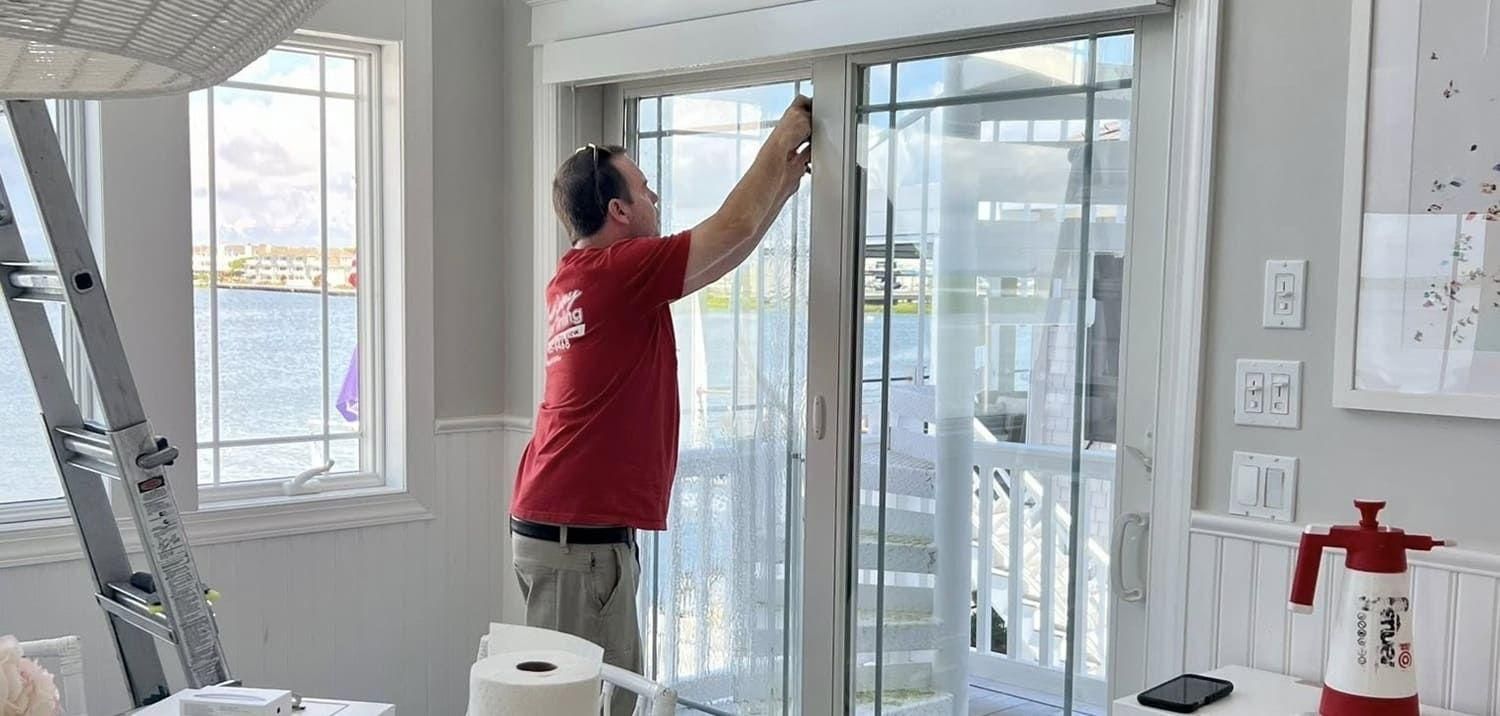
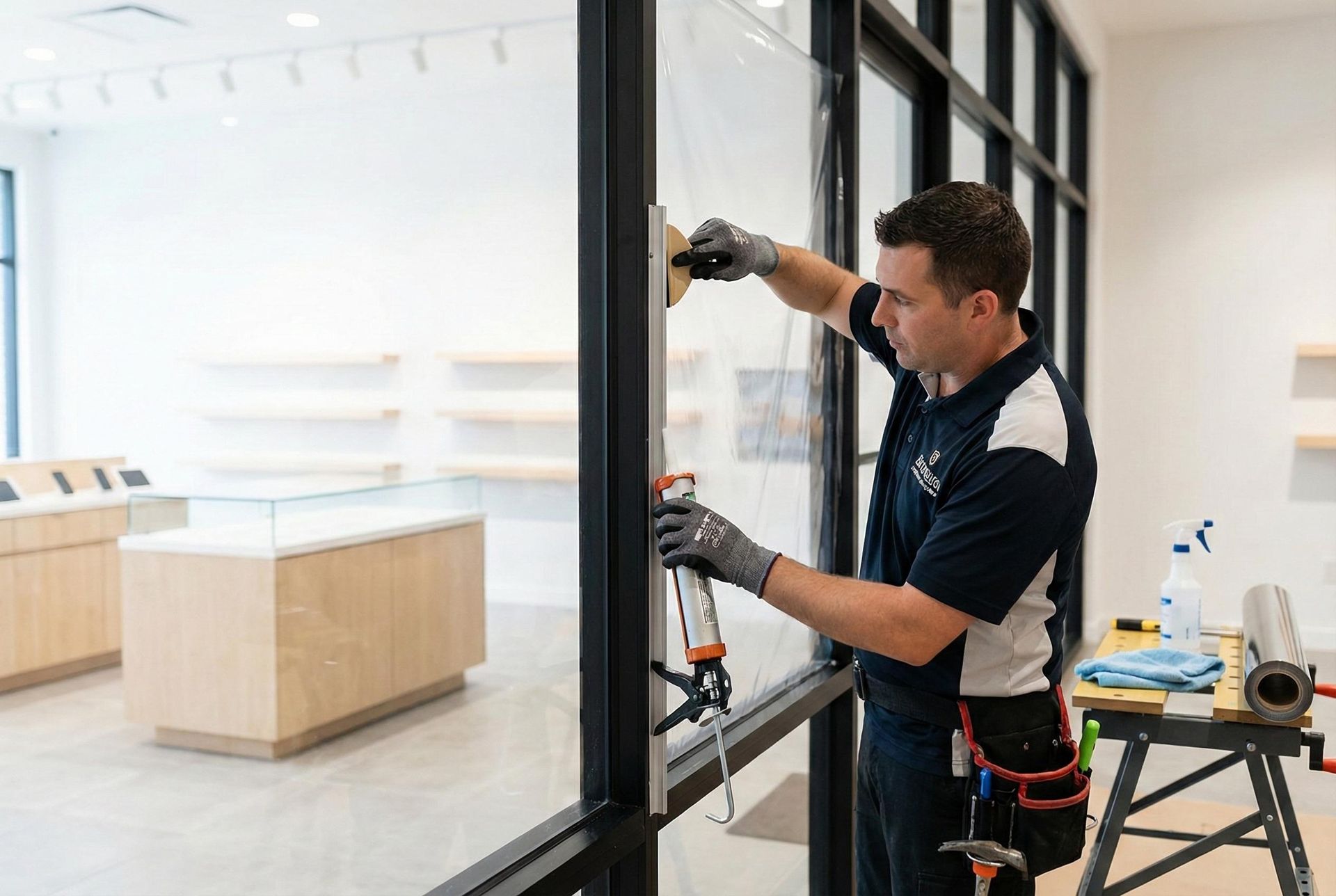
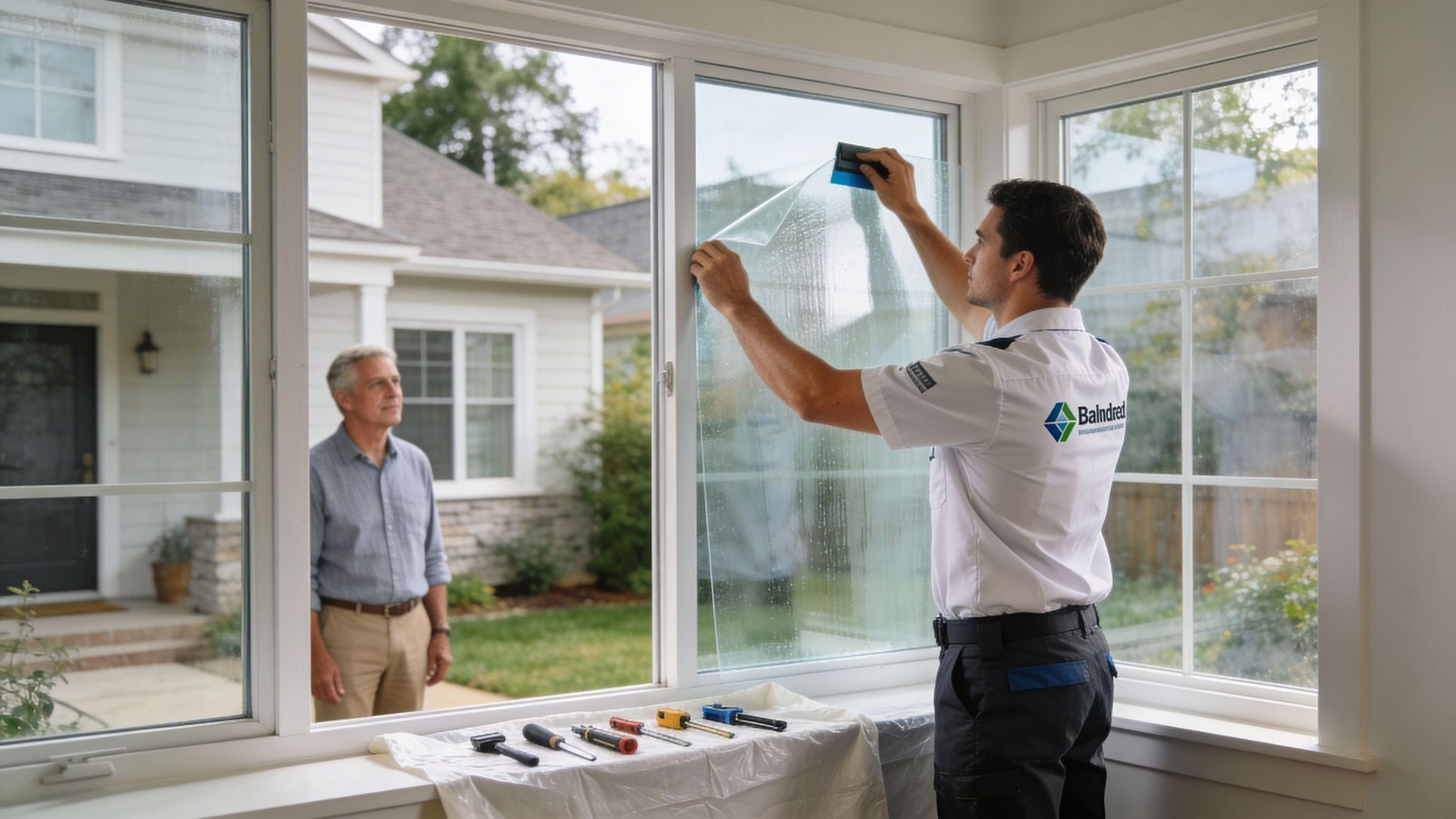
Surface preparation and contamination control. If the glass is not cleaned properly, small particles can be trapped, creating visible imperfections and potential weak points. A professional installer uses correct preparation tools and methods to reduce contamination and produce a clean bond.
Edge finish and adhesion. Many early failures appear as edge lifting. This can happen from poor installation, aggressive cleaning, or ongoing moisture.
Professional installation helps ensure correct edge work and curing conditions, which supports a longer service life in a window film protection NJ environment.
Glass and frame compatibility. Not all glass types behave the same under film. Some insulated glass units, tinted glass, and specialty coatings can be more sensitive to heat. A professional assessment helps avoid selecting a film that increases thermal stress risk. For commercial properties, frame type and mounting details also influence whether a security film system should include additional attachment solutions.
Warranty support. Manufacturer warranties often require
professional installation by an authorized dealer. If warranty coverage matters to you, professional installation is part of protecting that investment.
Safety vs security film comparison table
The structured comparison below is designed to be easy to scan for readers and for AI generated summaries. Values vary by product line, glass type, and project requirements, but these categories reflect typical differences.
- Safety Film
- Thickness: Lighter to mid range thickness
- Impact resistance: Moderate, focused on retention after breakage
- Primary purpose: Reduce injury risk from broken glass
- Installation complexity: Standard professional installation recommended
- Cost range: Lower to mid range depending on coverage area
- Best use cases: Doors, sidelites, interior glass, child safety areas
- Security Window Film
- Thickness: Typically thicker, multi layer construction
- Impact resistance: Higher, designed to resist tearing and delay entry
- Primary purpose: Delay forced entry and improve post impact retention
- Installation complexity: Higher, frame and edge performance matters
- Cost range: Mid to higher range depending on thickness and scope
- Best use cases: Storefronts, ground floor windows, high risk access points
Performance levels and features at a glance
- Glass retention strength: Security film is generally stronger, especially in repeated impact scenarios.
- UV protection: Many safety and security films provide high UV rejection, depending on product.
- Optical clarity: Both can be clear, with options that include solar control or decorative looks.
- Long term durability: Both can last many years with premium products and professional installation.
FAQ: Safety film vs security window film
Does security window film make glass unbreakable?
No. Security film helps hold broken glass together and can delay entry, but the glass can still break.
How thick is safety film compared to security film?
Safety film is usually thinner than security film. Security film commonly uses thicker, multi-layer construction.
Which is better for a home in South Jersey?
Safety film is great for injury reduction. Security film is better when forced entry risk is a priority, especially on ground floor glass.
Which is better for storefront windows in Philadelphia?
Security film is usually the better match because it is designed to delay smash-and-grab entry attempts.
Do both films provide UV protection?
Many do. Product selection matters, so confirm UV rejection levels for your chosen LLumar Vista window film option.
Will film prevent glass from falling out during storms?
Film can reduce shard scatter and help retain glass. Security film generally provides stronger post-breakage retention.
Is safety film enough for vandalism?
It can help with retention, but security film is designed to resist tearing and is typically better for vandalism risk.
Does security window film require special installation?
Often yes. Edge performance and frame conditions matter, and some projects benefit from attachment solutions.
Can window film be installed on double pane windows?
Yes in many cases, but glass type and seal condition should be evaluated to avoid thermal stress issues.
How does New Jersey climate affect window film performance?
Sun exposure, temperature swings, humidity, and condensation can influence cosmetic aging and edge adhesion over time.
How long do safety and security films last?
With premium products and professional installation, many films last for years. Exposure and maintenance affect lifespan.
What maintenance is required?
Use gentle cleaners and microfiber cloths, avoid abrasive tools, and protect film edges from scraping.
Do warranties cover bubbling or peeling?
Many manufacturer warranties cover defects like bubbling, peeling, or delamination when installed professionally. Terms vary by product and use.
Is security window film worth the extra cost?
If your priority is delaying forced entry and reducing break-in risk, security film often provides better value.
How do I choose the right option for my building?
Start with risk level, window type, and exposure. A professional assessment helps match the right LLumar Vista window film solution to your goals.
Conclusion: choose the right film for your risk level
The difference between safety film and security window film comes down to purpose and performance.
Safety film is primarily about reducing injury risk by helping hold broken glass together. Security window film is designed to provide stronger resistance and delay forced entry, while also improving post impact glass retention. For many properties in
Medford, Trenton, Cherry Hill, Camden, Mount Laurel, Burlington County, Ocean County, Philadelphia, and nearby Tri State areas, the right choice depends on whether the biggest concern is accidental breakage, storms, or break in attempts.
If you want expert guidance,
South Jersey Window Tinting can help you compare options and select the right solution.
Contact South Jersey Window Tinting for a
free estimate for professional installation of LLumar Vista window film products tailored to your safety and security needs, with durable performance for residential and commercial properties across New Jersey and the surrounding region.
Does Security Film Stop Active Shooter Threats? What South Jersey Schools and Businesses Should Know